Blog Post

International Osteopathic Healthcare Week 2015

In our continued work to increase awareness of the osteopathic profession and its contribution to global healthcare, the Osteopathic International Alliance and its member organisation, The AAOMT (that’s us), are promoting International Osteopathic Healthcare Week, 19-25 April 2015, which will be celebrated by osteopathic organisations around the world.


At the end of this Week the AAOMT will be hosting Jason Haxton for a series of osteopathic lectures to both professionals and members of the public.  Jason is the Museum curator at the International Museum of Osteopathy in Kirksville, Missouri.  Kirksville was the home town of A.T. Still, the pioneering Doctor who was the creator of this brilliant healing system.

In support of expanding awareness of the international osteopathic profession, the Osteopathic International Alliance (OIA), which is the primary international organisation entrusted by the osteopathic profession to work for global osteopathic unity and to advocate for high quality osteopathic healthcare, has published a Global Osteopathic Report.  Osteopathy and Osteopathic Medicine: A Global View of Practice, Patients, Education and the Contribution to Healthcare Delivery, available for download or purchase on the OIA website, describes the current state of the osteopathic profession globally and how it functions within national health delivery systems across a range of countries.


Osteopathic medicine/osteopathy is a patient centered holistic approach to health care that recognizes the importance of the relationship between the structure of the body and the way it functions. Osteopathic physicians and osteopaths use palpation and manual techniques to influence muscles, joints, nerves, connective tissue, circulation and internal organs to support the body’s ability to restore and maintain health.

The OIA advances the philosophy and practice of osteopathic medicine and osteopathy worldwide, through its more than seventy-five organizational members representing more than 110,000 osteopathic practitioners through institutions in thirty countries on five continents.


Learn more about the osteopathic profession and the OIA at www.OIAlliance.org or on Twitter: @OIAlliance, #IOHW2015.

Blog Post

This years AGM was a success in Edmonton

Thank you to Darcy Freisen and his team at St Alberta Acupuncture and Wellness for hosting this years AAOMT AGM.
Osteopathic therapy continues to go from strength to strength in Alberta and we are proud to be at the forefront of this growing profession.

Some of the participants of the 2014 AGM in Edmonton
Blog Post

International Osteopathic Healthcare Week 13-19 April

AAOMT logo color print

On the morning of Thursday, April 17th, we will be holding an open house where the president of the association will be on had to answer all questions pertaining to osteopathy in Alberta.

IMG_1262P-001


To reserve a time or express interest in this event and the osteopathic profession in Alberta, contact the AAOMT at info@osteopathyalberta.com

Location:

Intrinsi
103, 1608 17th Ave S.W
Calgary,
Alberta
Canada


Blog Post

What Level of Osteopathic Education Should I Be Looking For?

We get many inquiries about osteopathic education in Canada.  At present osteopathic therapy isn’t regulated and schools vary from 4 years full-time to 9 months part-time.   Why such a variation?  Most of this discrepancy can be attributed to the WHO benchmarks in osteopathic education that were published in 2010.  They were reasonably clear when it came to full-time education, but vague when it came to part-time.  This means that a school can provide a very short course that is short on practical training and research and still claim to meet the standards.  In order to get a good education we encourage people to get a global understanding on the present state of osteopathy and choose an education that will stand up to regulation when it happens in Canada.  The Osteopathic International Alliance (http://wp.oialliance.org/) provides a great resource in the following document which I recommend every would be student should read:

Osteopathy and Osteopathic Medicine: A Global View of Practice, Patients, Education and the Contribution to Healthcare Delivery

In addition, the International Journal of Osteopathic Medicine recently published a paper entitled, “Osteopathic student satisfaction and preparedness to practice: A comparative study “.


The introduction provides a snap shot of osteopathic education in France, Italy and the UK.  These European countries  act as a good yard stick by which to measure Canadian Education.  You can read the introduction here and see how the schools you are researching stack up:

Introduction

A short history of osteopathy in Europe

In 1892, Andrew Taylor Still, founded the American School of Osteopathy in Kirksville, Missouri. In turn, John Martin Littlejohn, himself a pupil of A. T. Still, founded The British School of Osteop- athy (BSO) in London in 1917. The BSO was the first osteopathic school outside of the USA, but over the following decades, as osteopathy developed, schools were established across Europe. In 1923, Major Stirling introduced the osteopathic concepts to a group of medical doctors in France and the first school of osteopathy in Paris, Ecole Europe- enne d’Osteopathie, was opened in 1951 by Paul Geny, although it moved to London in 1965.1 In 1981 a French osteopath, Alain Bernard, intro- duced osteopathy to Italy and in 1983 Eddy Deforest, ran the first Italian course in osteopathy in Ancona.2

Regulation in UK, Italy and France

Today, osteopathy is practised in 22 nations across Europe, each with their own regulatory authority for practice. Each country is currently at various stages of regulation and recognition.3

The United Kingdom (UK) was the first country in Europe where osteopathy was recognized as a profession, finally being granted formal recogni- tion by Parliament in the 1993 Osteopaths Act.4 This statute is essential to the osteopathic pro- fession providing it with the same legal framework of statutory self-regulation as other healthcare professions. Courses of osteopathy have been fully integrated into the university system enabling graduates to obtain a Master or Bachelor of Oste- opathy, or Osteopathic Medicine degree, (M.Ost or B.Ost) or a Bachelor of Science (BSc, BSc Hons) in Osteopathy or Osteopathic Medicine, depending on the institution attended.5 These courses, currently provided by 10 institutions, have a duration of four years full-time or five years part-time.

In Italy, osteopathy is not recognized as a healthcare profession. The Italian Register of Os- teopaths has regulated the profession since 1989 and controls the quality of teaching in eleven full-

time and eighteen part-time schools. Six year part- time courses are only available to students who have a previous bachelor degree in sports science, massage therapy, medicine or physiotherapy but full-time schools can be attended by any student with a high school degree where the course is five years in duration.6 Graduates of both courses obtain a Diploma of Osteopathy (DO).

In France, osteopathy was recognized by the National Parliament in 20027 and teaching and practice have been regulated since 2007.8 There are sixty-four schools that are authorized to issue diplomas in osteopathy, twenty eight of which are full-time and thirty six are part-time.9 Full-time schools can be attended by any students who have graduated from high school and the course is six years in duration. Part-time schools can be attended by physiotherapists and General Practi- tioners (GP) and the course has a duration of four years. As with Italian courses, graduates obtain a DO.


Blog Post

Osteopathic Therapist Working at Sochi Olympics

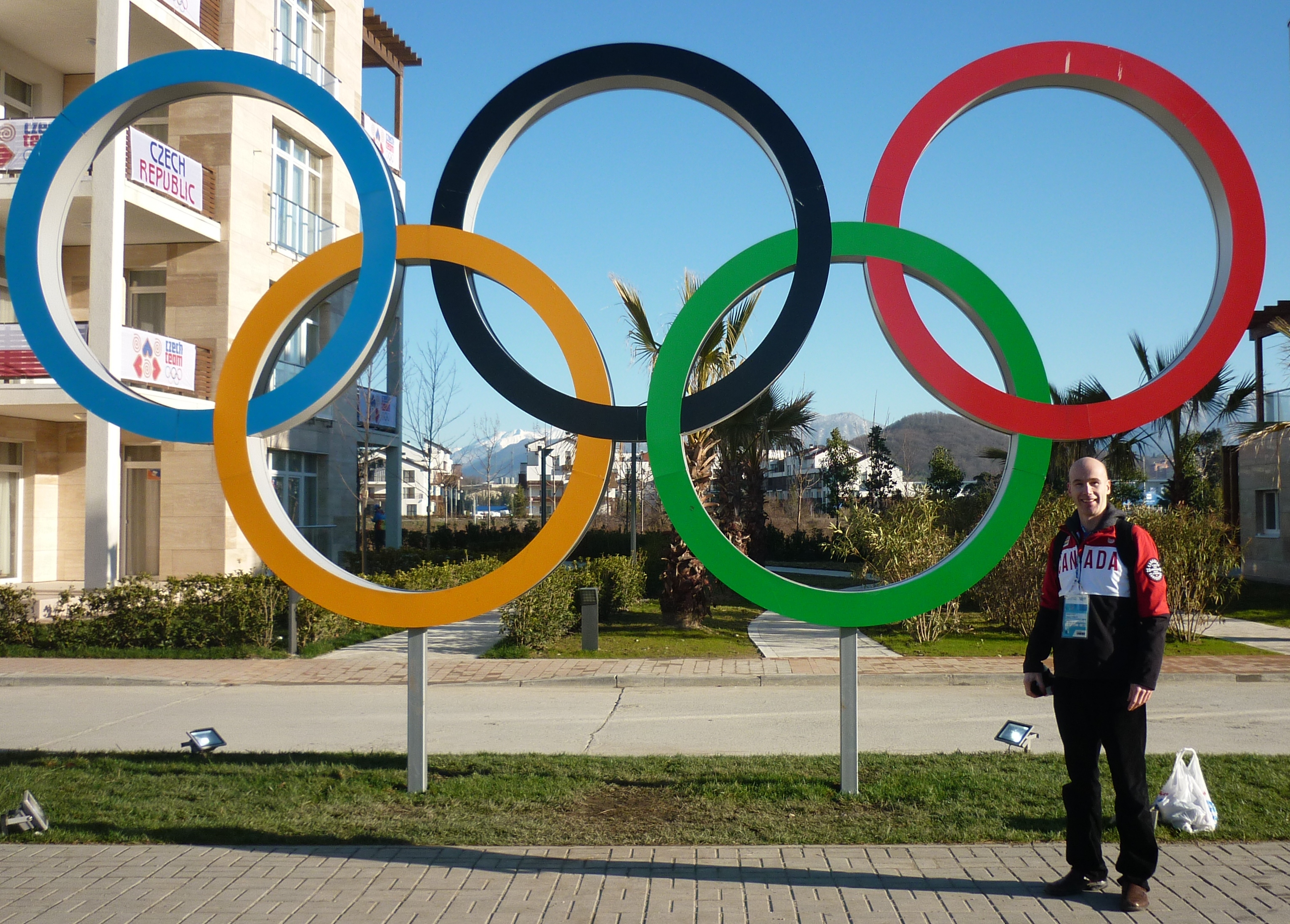
Ed in SochiWe are proud to announce that one of our members Edward Paget will be directly helping Canadian Athletes at the Sochi Olympics! This is a great step forward for osteopathy as the benefits of this therapy begin to be realised by elite sport. This announcement follows on from the success that UK osteopaths had in the poly clinic and the London Olympics in 2012. Where 25 osteopaths were chosen by the host nation to work along side their medical colleagues offering treatments to athletes for the duration of the Games. We wish him and the Canadian Olympic team all the best in Russia.

Blog Post

Looking to work in Canada?

OCanad picFor osteopaths looking to move from the UK to Canada this recent article in ‘The Osteopath’, the official magazine of the General Osteopathic Council, is a must read. In it the author highlights 8 key areas that are important to understand before thinking of working as an osteopath in Canada.

To read the full article click here


Blog Post

Choosing a school in Canada

How to choose and osteopathic school in Canada.

A lot of people contact the AAOMT wondering about what school when wanting to study osteopathy.
We can’t advise on which schools as that is a personal decision you have to make.

When a therapist applies for membership of the AAOMT we look at what competencies that person has studied and how many hours
their education took.

We follow the guidelines that were complied in 2010 by the World Health Organization for minimum
requirements for education in Osteopathy (4,200hrs full time over 4 years).

We’ve made the following video to help you choose your school in Canada.